In brief

Assess a solder-joint inspection retrofit against the actual assembly variants, existing presentation and available viewing access. Keep each variant's visible decision, reference samples and recipe requirements explicit; an acceptable view of one assembly does not establish coverage of the others.

Record the existing line interfaces and constraints before agreeing changes. Use the integration guide to define result association, reject or hold handling and restart responsibilities.

On the production floor

Plan for the conditions your team handles every day — Solder Joint Inspection

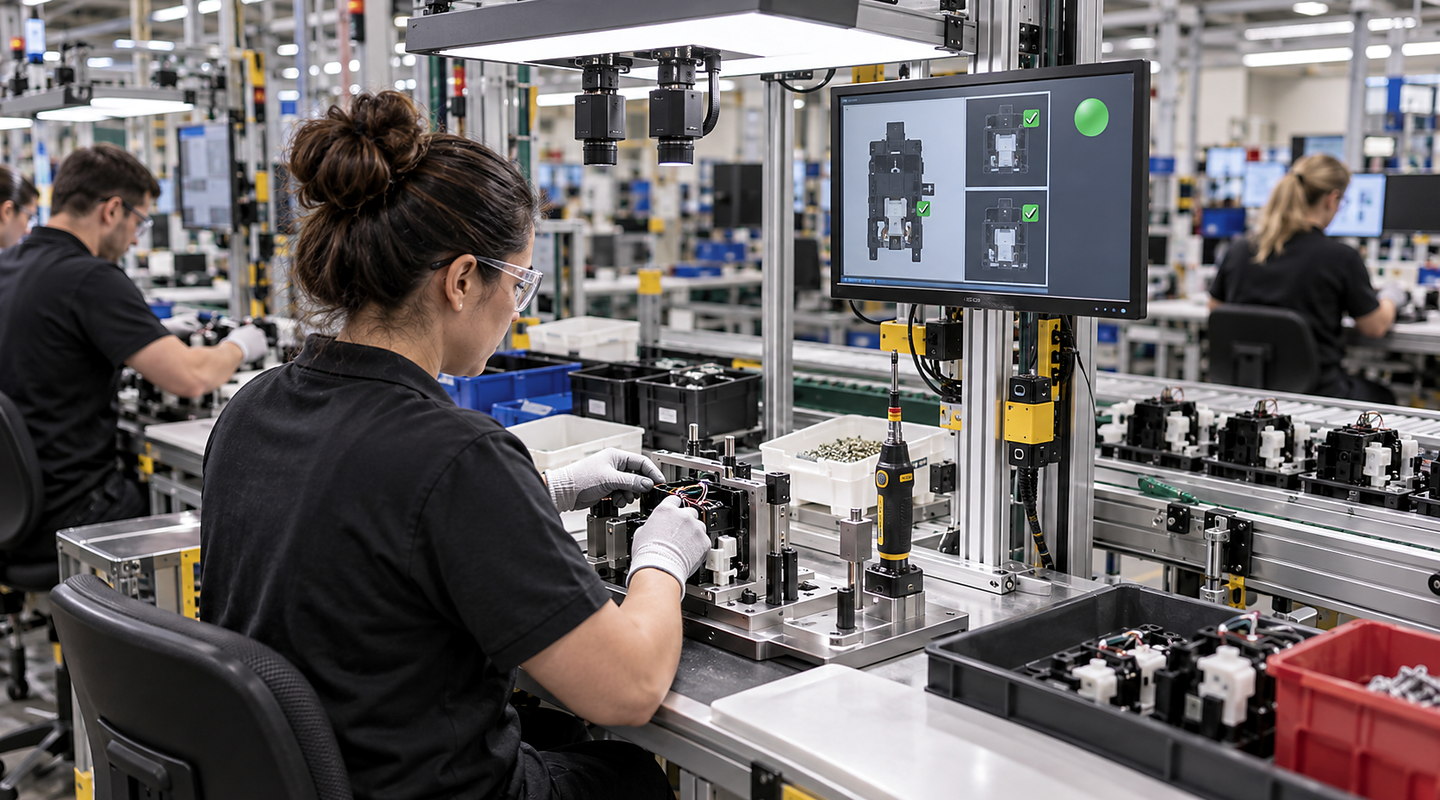
Plan solder joint inspection around representative good, bad and marginal samples, line presentation, lighting, reject handling and challenge criteria. Discuss an optical feasibility trial with Oxford Vision Systems. For retrofit or multi-variant checks involving visible solder-joint inspection, the deciding details include visible defect or measurement definition for visible solder-joint inspection, part presentation and production speed and false-accept, false-reject and challenge criteria.

Discuss your application
Your application

Details worth resolving early for retrofit or multi-variant checks involving visible solder-joint inspection

Question 1

Visible Defect or Measurement Definition for Visible Solder-Joint Inspection

For retrofit or multi-variant checks involving visible solder-joint inspection, describe the current position, required outcome, acceptable limits and known exceptions for visible defect or measurement definition for visible solder-joint inspection. That lets us compare options against your real production rather than one nominal value.

Question 2

Good, Bad and Marginal Sample Range

For retrofit or multi-variant checks involving visible solder-joint inspection, describe the current position, required outcome, acceptable limits and known exceptions for good, bad and marginal sample range. That lets us compare options against your real production rather than one nominal value.

Question 3

Part Presentation and Production Speed

For retrofit or multi-variant checks involving visible solder-joint inspection, describe the current position, required outcome, acceptable limits and known exceptions for part presentation and production speed. That lets us compare options against your real production rather than one nominal value.

Question 4

Optics, Lighting and Environmental Conditions

For retrofit or multi-variant checks involving visible solder-joint inspection, describe the current position, required outcome, acceptable limits and known exceptions for optics, lighting and environmental conditions. That lets us compare options against your real production rather than one nominal value.

Question 5

Recipe, Reject and Line-Control Interfaces

For retrofit or multi-variant checks involving visible solder-joint inspection, describe the current position, required outcome, acceptable limits and known exceptions for recipe, reject and line-control interfaces. That lets us compare options against your real production rather than one nominal value.

Question 6

False-Accept, False-Reject and Challenge Criteria

For retrofit or multi-variant checks involving visible solder-joint inspection, describe the current position, required outcome, acceptable limits and known exceptions for false-accept, false-reject and challenge criteria. That lets us compare options against your real production rather than one nominal value.

Your operating cycle

Plan for more than automatic running

Include replenishment, normal production, planned change, short stops, fault recovery, cleaning and maintenance for retrofit or multi-variant checks involving visible solder-joint inspection. A fast automatic step can still leave your team with a slow or awkward overall process.

Prove the result

Test retrofit or multi-variant checks involving visible solder-joint inspection against representative good, bad and marginal samples

Normal production

Run the agreed assembly variants in their intended presentation and production pattern. Retain the selected recipe, reference sample decisions and observed results so coverage can be reviewed by variant.

Difficult conditions

Include representative marginal joints, acceptable appearance variation and difficult viewing access for the intended variants. List obscured features and untested variants rather than transferring a result from one assembly without evidence.

Fault and recovery

Agree how a wrong or unavailable recipe, unusable view, missing result or interrupted assembly will be handled. Check the proposed reject or hold response and controlled restart through the agreed trial method, without assuming automatic diagnosis or recovery.

Important limits

Be clear about what the trial has shown

Compare with In-Line Inspection Using Visible Solder-Joint Inspection if that operating pattern is closer to your application.